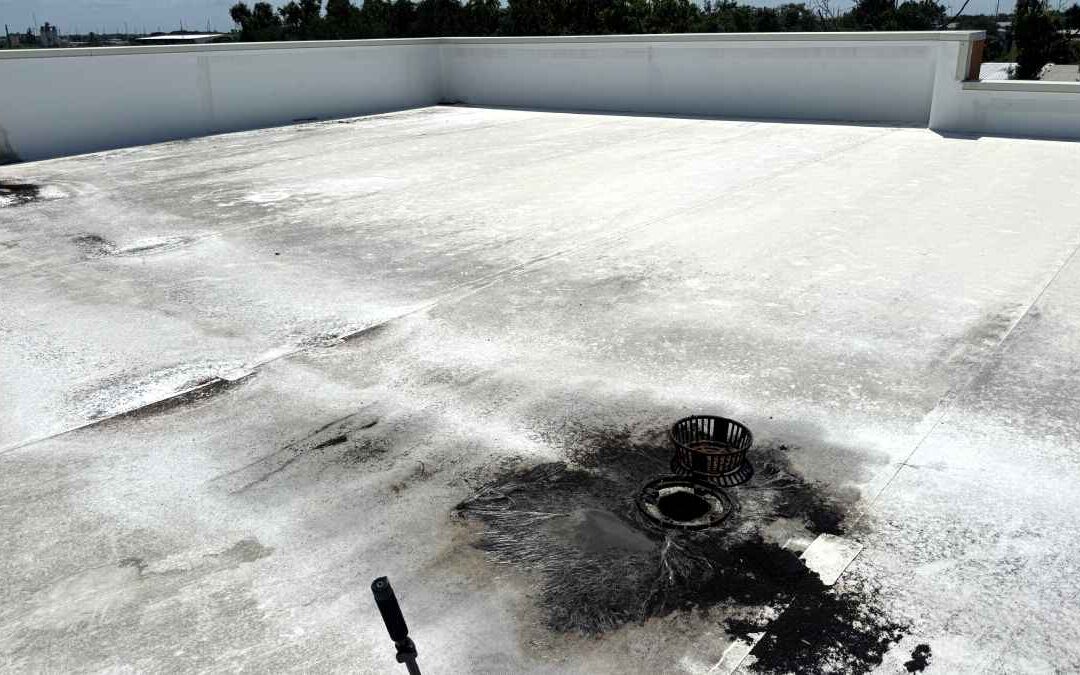
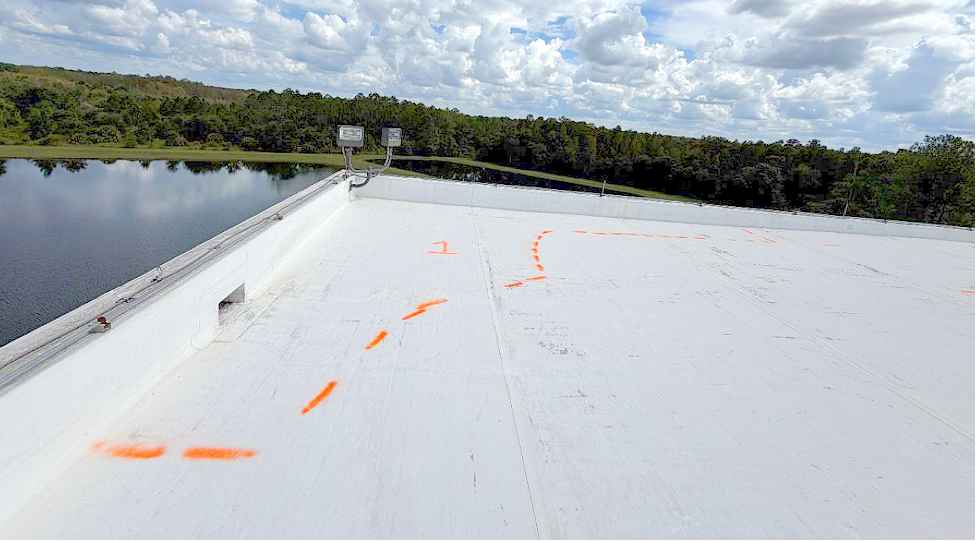
When assessing a 30,000-sq-ft roof, Structura View combined electrical-resistance testing (Tramex Dec Scanner and Tramex RWS), targeted core samples for validation, and drone mapping for documentation and area calculations. This multi-step approach revealed hidden moisture and delivered a clear, data-driven picture of the roof’s condition—beyond what the eye can see.
For the client, that means clear, actionable insights, fewer unnecessary repairs, and the confidence to move forward with a plan that protects both their budget and their building.
Transcript:
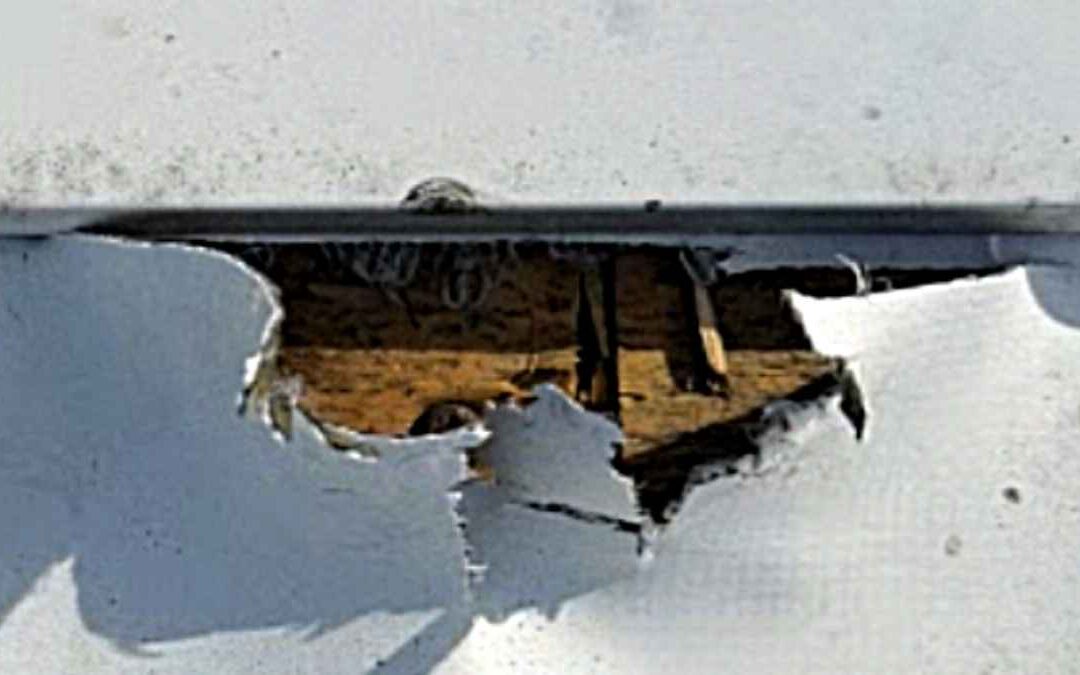
So, this roof system is comprised of a modified Bitumen membrane, perlite, and ISO insulation over a metal deck, which makes it a great candidate at the 30,000 ft total roof size mark to be able to utilize the test method in deploying a Tramex Dec Scanner, a Tramex RWS scanner, which is electrical resistance moisture meter testing, and then popping core samples in multiple areas to verify suspected wet locations and suspected dry locations.
Utilizing moisture probes or electrical resistance to verify moisture content at various points in the roof’s composition. Once our machines are calibrated, we then work the entire roof system using the lawn mower is what I like to call it, the Tramex Deck Scanner to find where we think moisture is, and then we use the RWS scanner to paint an exact outline of the moisture areas on the roof.
Once we finish that, we fly the drone. We map it all out and we’re able to get an accurate estimate on how much moisture is wet within the roof system to give you guys accurate results in your reports so you know exactly what to do with these roof systems.
Related: Moisture Surveys and Mapping