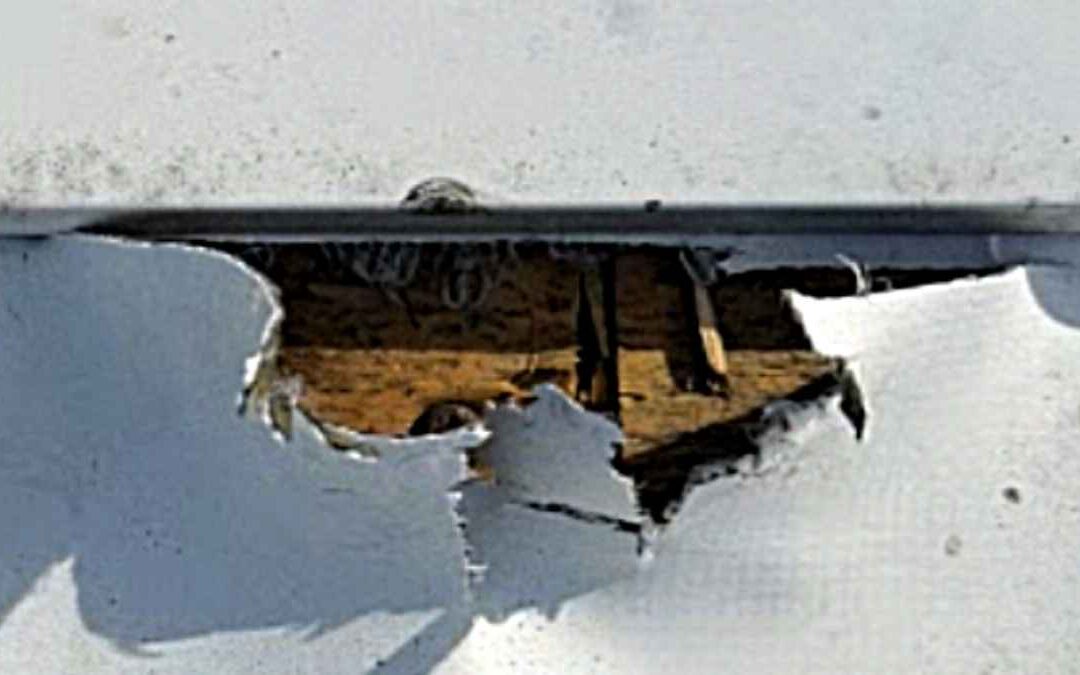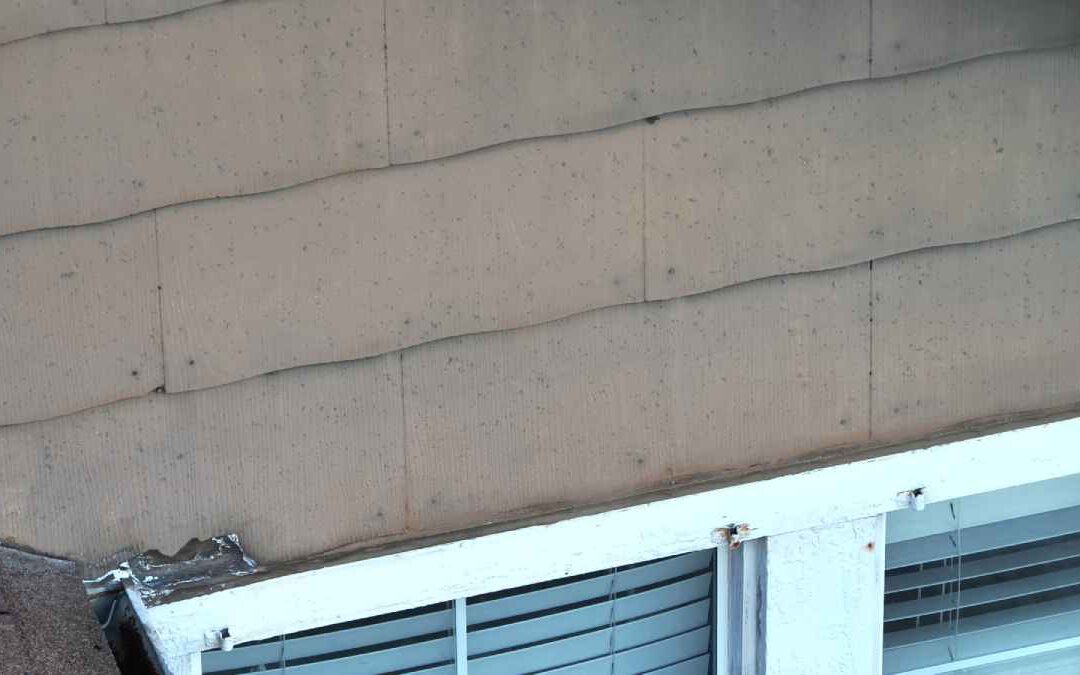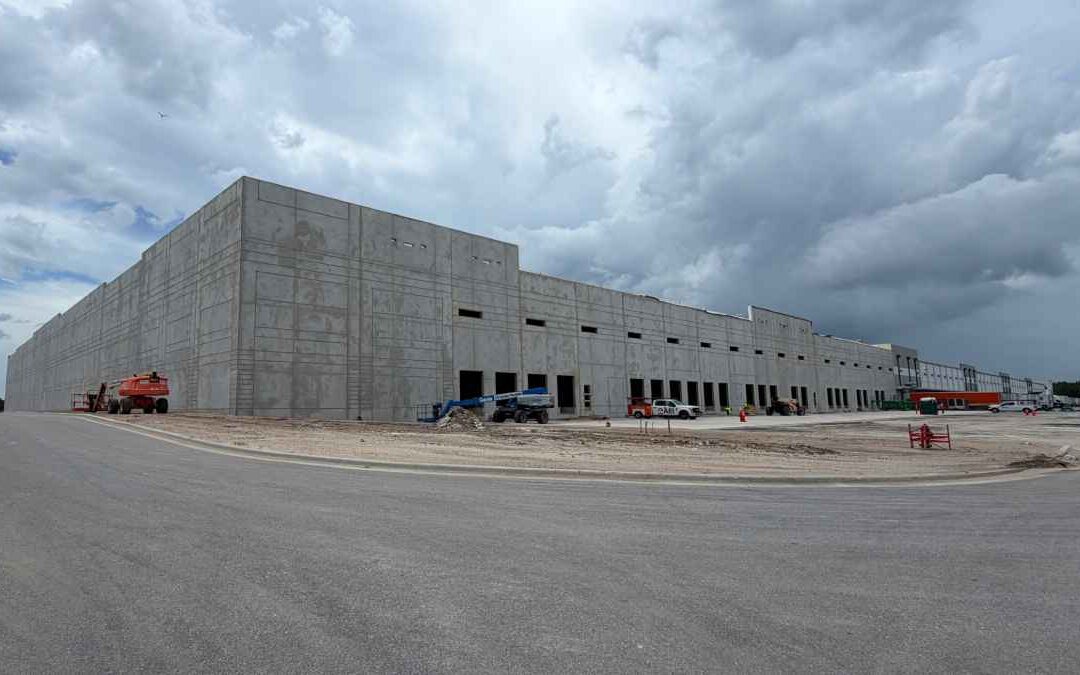
A Florida facility was dealing with recurring leaks, ponding water and a patched TPO roof rated only “fair.” Each leak meant another repair call and another patch. Meanwhile the big question went unanswered: is this a repair job, or a full replacement?
For an owner or facility manager, that question carries a big price tag.
- Replace too much, and you pay to tear off and rebuild sections that are still dry and working.
- Replace too little, and wet insulation stays trapped under new membrane, where it keeps losing insulating value and can bring the leaks back.
- Keep patching, and the damage keeps spreading underneath, quietly growing a repair bill into a replacement bill.
This roof had layers of lightweight insulating concrete, which makes guessing even more expensive. Tearing out and replacing that material adds major cost and time to any project. Without knowing where the water was, every option was a gamble with the budget.
The investigation
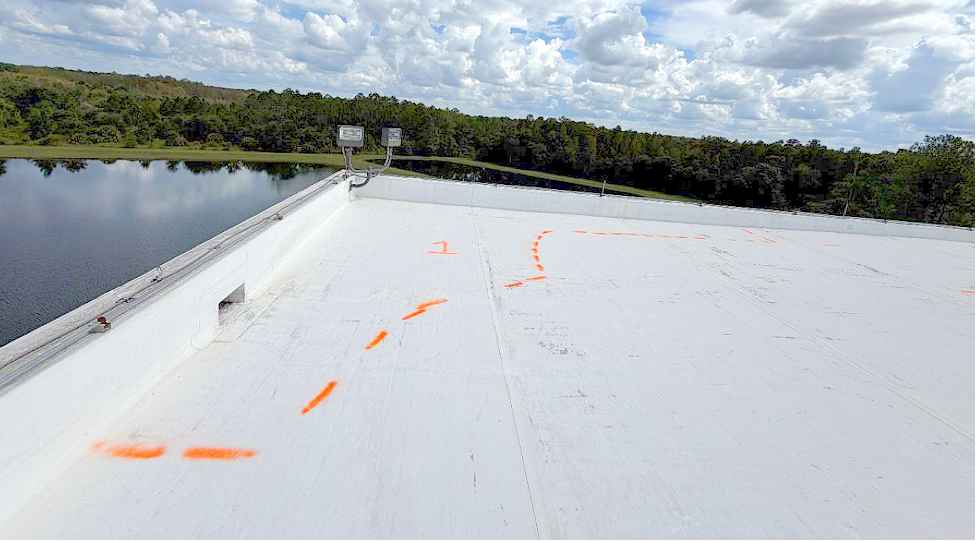
A non-destructive moisture scan of the whole roof mapped where moisture was trapped inside the roof layers with three core samples taken to validate the findings.
The investigation found that about 25% of the roof held moisture, spread across 33 distinct areas mostly around rooftop units and curbs, along the perimeter, and in one large area in the center of the roof.
With the wet areas pinpointed, the facility could plan repairs where the water actually was.
The outcome: one map, two clear paths forward
The investigation gave everyone at the table the same facts, which made the next decision easier on both sides.
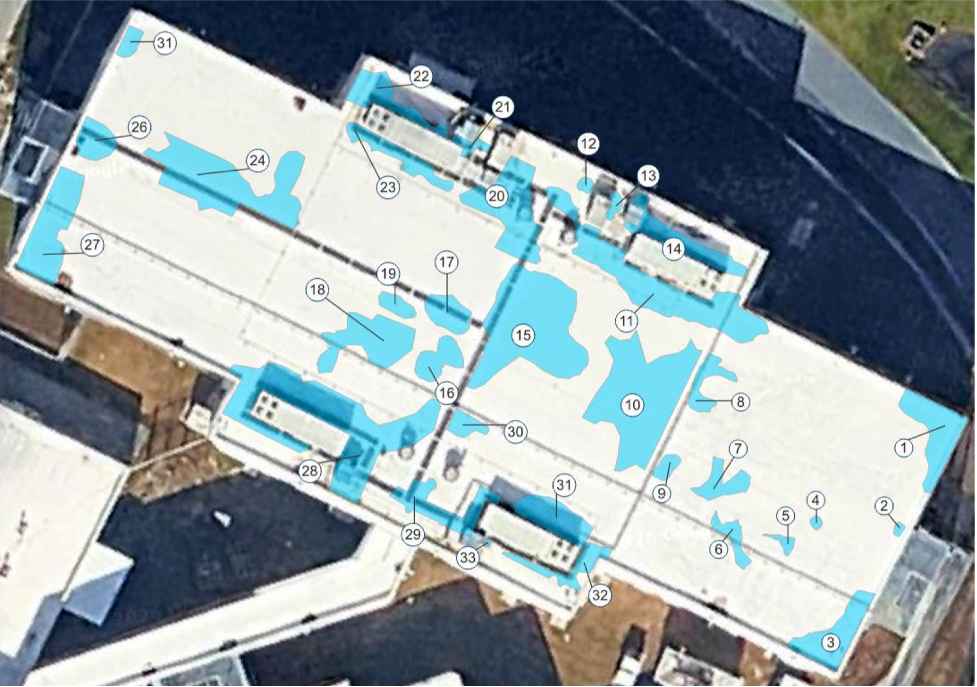
For the owner and management team:
- A budget based on data, not guesswork. Funding goes where the water is, not into tearing out dry roof that’s still doing its job.
- Fewer surprises. Knowing where the moisture is up front keeps change orders and mid-project cost increases to a minimum.
- A clear answer for leadership. A marked moisture map makes it easier to explain and defend the decision to a board, finance team or facility director.
For the roofing contractor:
- An accurate scope from day one. The crew knows where to remove and replace before mobilizing, so bids are tighter and more competitive.
- Less risk on the job. Wet areas are marked on the roof itself, so fewer hidden conditions turn up once the tear-off begins.
- A stronger client relationship. Recommending repairs backed by data builds trust with the owner, and the owner has a reason to call again.
With everyone working from the same road map, repair or replace stops being a debate and becomes a plan.
What this means for your roof
If you own, manage or repair a commercial roof, watch for these signs:
- Leaks that keep coming back. If the same areas need patching again and again, water is likely spreading below the surface.
- Ponding water. Water that sits on the roof finds its way into weak spots over time.
- A roof full of patches. Each patch fixes one spot. It doesn’t tell you what’s happening underneath.
- A surface that looks “fair.” The membrane can look fine while the layers below are holding water.
If any of these sound familiar, find out where the moisture is before you spend money on repairs or a replacement. A moisture investigation shows exactly where the problem is, so the budget goes to the right place the first time.
Repair or replace? Get the answer before you spend.
Schedule a roof moisture investigation at StructuraView.com and base your next roofing decision on facts, not guesswork.